Emil S.T. David

Law Student · Former Paratrooper

Not everything that is lawful,is honorable.

WRITINGS

Muthusami v. The Kraft Heinz Company et al.

WRITINGS IV

It Was Just a Potato

At a Glance

→ A conversation about French fries and potatoes raises a bigger question about how far modern food has moved from what it originally was.

→ Food companies use scientists, researchers, marketers, and full corporate teams to understand what consumers want and what keeps them coming back.

→ In Muthusami v. The Kraft Heinz Company et al., Davina Muthusami sued major food manufacturers over alleged harms connected to ultra-processed foods.

→ The central legal problem is causation: when years of diet, habits, genetics, exercise, and countless products are involved, how do you prove which product caused what?

→ If companies are not just selling food, but studying the person eating it, where does personal responsibility end and corporate responsibility begin?

— Emil
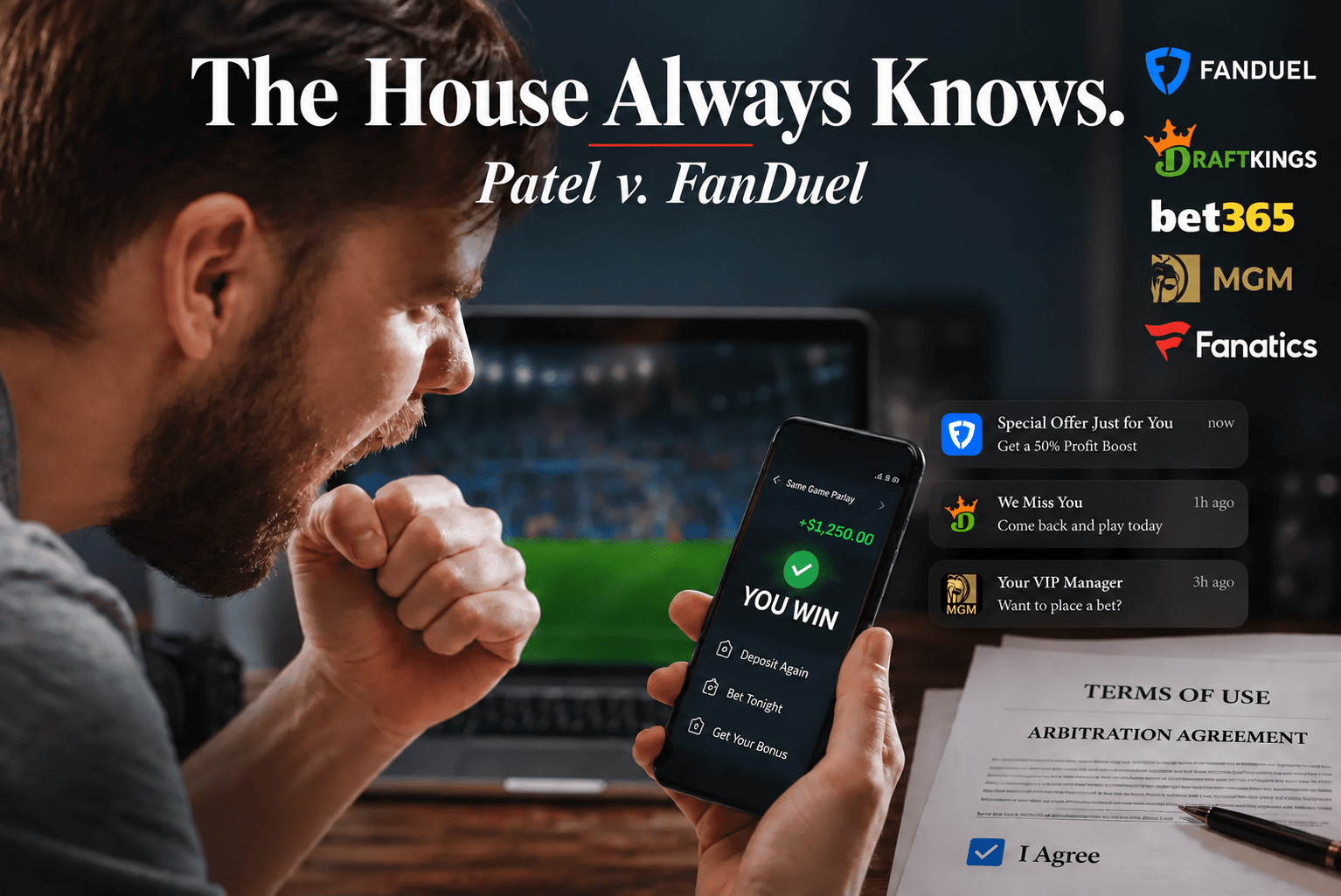
The House Always Knows - Patel v. FanDuel

WRITINGS III

The House Always Knows.

At a Glance

→ Sportsbooks know a lot more about how you gamble than you'd realize.

→ In Patel v. FanDuel, Amit Patel alleged that he wagered more than $20 million while receiving VIP treatment, gambling credits, and predatory encouragment from a FanDuel VIP account manager.

→ A jury never got to hear those claims. The case was moved to arbitration before the court ever decided whether FanDuel was actually liable.

→ By clicking “I Agree,” you can bind yourself to click-wrap contracts that include arbitration clauses and class action waivers you probably never read.

→ If sportsbooks have already chosen the battlefield through arbitration, how do plaintiffs change the fight?

— Emil

Social Media Adolescent Addiction and Personal Injury Products Liability Litigation

WRITINGS II

Social Media Harm: Who Is Responsible?

At a Glance

→ Social media has changed how people form attachments, including the rise of parasocial relationships.

→ A March 2026 jury verdict found Meta and YouTube negligent for harms linked to platform design.

→ Thousands of similar claims are now being litigated against major social media companies.

→ Section 230 has historically protected platforms from liability for content created by their users. What about now?

→ If the platform itself is designed to keep you scrolling, at what point does engagement become exploitation?

— Emil

The New York Times vs. OpenAI and Microsoft

WRITINGS I

AI and Legal Liability on a Collision Course?

At a Glance

→ AI is developing incredibly fast. The law is not.

→ Courts are already dealing with disputes that would have been difficult to comprehend five years ago.

→ Copyright is getting most of the attention right now.

→ Will liability become a bigger issue?

→ Who answers for the potential harm?

→ The decisions being made today may establish the legal boundaries of AI for years to come.

— Emil